I never got into Manga as a child, but many of my friends grew up on Inuasha, Naruto, or Dragon Ball Z. I knew that this was a popular art style and tried to mimic the style (without watching any of the shows or reading any of it), but for some reason I was never drawn to learn more about the styles. I was excited to start reading it and try my hand at getting back into them since I feel that it is so important for an artist (and storyteller) to be well versed in all forms of visual storytelling. The first Manga I decided to try was Battle Angelita, Last Order. It was an interesting read... and I definitely had to reread it again in order to fully understand it. What surprised me most about it, right off the bat, is that Manga isn't afraid to go violent or approach these crazy premises; in Manga, they somehow just work. Granted, you could say that the superhero comics were violent and have far fetched premises, but this Manga showed their faces with bloody bandages and half robot humans... it was a lot to take in at first. I had trouble originally reading it since I was unsure if it was read left to right or right to left or top to down. I finally figured out that it was read top to bottom but the text was read right to left, presumably because of the way it was translated. But I felt the story was very complicated; which the half-asleep Carla that first read it couldn't follow any of the storylines. But I think this complexity is what also makes it compelling, since you aren't dealing with your typical storylines. I mean where else do you read about half robot children?
Even though Battle Angelita, Last Order didn't seem to be my cup of tea, I decided to read a little bit of Astro Boy and see how everything started. Suddenly, robot-human crossovers don't seem so crazy of a premise. After scrolling through some more Manga's, I realized that this robot-human theme was a very popular concept. To me, what's interesting is that the closest American-originated idea (that I can think of at the moment) that comes close to humans and robots (excluding movies about AI) is Transformers. Clearly though, all types of audiences respond to ideas like this, as shown by Americanized versions of these concepts such as Pacific Rim. After reading these Manga's, you can also witness bits where American comics have taken bits of their artistic style or visual style for their own comic work.
After this little taste into Manga, I got hooked. I decided to also read Ranma Book 1 by Takahashi, which is a complex premise that you wouldn't see usually within an american comic. I think the premise alone (a boy changing into a girl based on the temperature of water thrown on him) intrigued me so much that I felt drawn to finish the first book in one sitting! Honestly, where else do you find things like that? In this Manga specifically, I liked how the expressions for me were super exaggerated and how the designs simplified depending on the situation the main character was in. It was an effective way to show that emotion for that quick read and it was funniest parts of the manga for me.
Friday, March 20, 2015

Wednesday, March 11, 2015
Week 9: Wide World of Comics
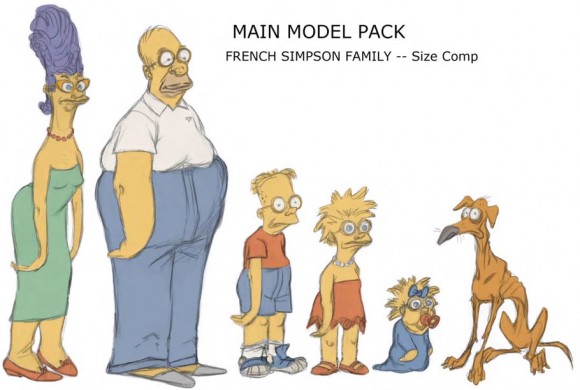
To me, one of the most interesting aspects of animation, comics, and graphic novels is the different styles they can take on. Today in class, we saw a clip from a film I watched last year, called The Triplets of Belleville by Sylvain Chomet. Chomet is known for his exaggerated characters that really push how far they can go, but also has a wonderful sense of storytelling. The characters are each unique and have their own distinct personalities and character designs. All of it works together to make a complete message for the audience. For example, The Triplets of Belleville is dialogue-free. Which is amazing, considering it's a full-length feature film. In America, it is rarer to see those types of films. The only other film that rivals that status is Wall-E, but that also still restrains to the cute, classic appealing characters. Chomet's style has a sense of charm, though it is also at times slightly disturbing, it is something that really pushes the animation industry. I mean, just look at how far he can push something like the Simpsons:

In Europe, since differently accepted styles and genres are more readily accepted, you have a little more leway to create interesting designs such as this. In Europe, the Triplets of Belleville did very well and was critically acclaimed, yet in America not too many people have ever even heard of it. Yet it is because artists like Chomet have the freedom to create these unique design that the medium continues to grow and evolve, and we see more of a variety of work and styles.

In Europe, since differently accepted styles and genres are more readily accepted, you have a little more leway to create interesting designs such as this. In Europe, the Triplets of Belleville did very well and was critically acclaimed, yet in America not too many people have ever even heard of it. Yet it is because artists like Chomet have the freedom to create these unique design that the medium continues to grow and evolve, and we see more of a variety of work and styles.
Additionally this week, I also read some Moebius. As he is a well-known name in the illustrator industry, I thought his ink work to be particularly interesting. While he's a master at composition, I found his use of color to also be quite interesting as well. Though most of his work is shaded solely through the ink, he isn't afraid to use bold colors such as pruple or blue to give an added sense of depth and mood in his work. At times though, I did feel the wealth of detail to be overwhelming and at times hard to focus your eye.
Saturday, February 28, 2015
Week 8: Stereotype and the Ethics of Representation
Talking about stereotyping and generalizations of a culture can be such a controversial topic that most people avoid talking about it at all. But I definitely feel that these harmful stereotypes hurt the cultures and people they exaggerate and I do not feel that they are necessary in creating these types of character designs.
Most of these stereotypes arose in a type that was centuries ago, yet they are the shorthand people still refer to. Unfortunately, most of it has now become unconscious and people now are too worried about 'rocking the boat' or believe that this is the way things should be, since it has always been that way. I believe that the biggest reason people use these stereotypes when creating games, animation, or comics is because they think its easier. And to some extent, it can be-- when you're creating a game and you need a reason for the main character to go save his costar, you make her a damsel in distress. If you're going to create a mexican character, the first thing you think of is to add a pancho and a sombrero. Yet these aren't accurate portrayals of these people, and it hurts the people who you generalize. Even when main characters are of an ethnic raced, they're a white-washed version of that race, so there's no mainstream view of how you represent these characters. Looking back on my favorite childhood films, if you actually question many of the motives of our favorite disney princesses, you'll find that many of them don't have much more to them than just 'being in trouble'.
I think that it is important for people to see that these stereotypes are happening but often times it is hard to have a normal conversation about it, because it makes people feel awkward. Most people don't like being told that they're privileged. It's a topic that makes them feel uncomfortable because it is something that they usually didn't even realize was happening, and everybody wants to believe that their own situation was the hardest to overcome. Nobody likes to admit that their own situation was easier, or that they were awarded chances that someone else never even knew about.
I think I have been affected by stereotypical representations, and almost to a strange extent. I am a mexican-american woman, though I don't look like your typical mexican. "Typical" meaning what is shown in mainstream media. I do not wear a pancho, sombrero, or ride a donkey and my skin is as light as paper -- yet seeing a mexican seen in a comic or movie as nothing more than the funny sidekick (usually portrayed as dumb, too), this affects me. Double that with being a mexican woman, where they're only ever portrayed as a maid, it not only affects your personal self confidence, but how others treat you. These stereotypes and generalizations are read in comic books and people see them as truths; they think that all mexicans are immigrants who lived poor lives, all women are dumb and shallow, and etc. A good example of this is even the Spongebob episode where they keep making jokes about squirrels and people believe it's true and treat Sandy like she's an idiot (when we all know she's the smartest character on that show). I think it takes more research to create a character with that background but it's not impossible; stereotyping is lazy and its only perpetuating an archetype that doesn't exist and isn't true.
I think I have been affected by stereotypical representations, and almost to a strange extent. I am a mexican-american woman, though I don't look like your typical mexican. "Typical" meaning what is shown in mainstream media. I do not wear a pancho, sombrero, or ride a donkey and my skin is as light as paper -- yet seeing a mexican seen in a comic or movie as nothing more than the funny sidekick (usually portrayed as dumb, too), this affects me. Double that with being a mexican woman, where they're only ever portrayed as a maid, it not only affects your personal self confidence, but how others treat you. These stereotypes and generalizations are read in comic books and people see them as truths; they think that all mexicans are immigrants who lived poor lives, all women are dumb and shallow, and etc. A good example of this is even the Spongebob episode where they keep making jokes about squirrels and people believe it's true and treat Sandy like she's an idiot (when we all know she's the smartest character on that show). I think it takes more research to create a character with that background but it's not impossible; stereotyping is lazy and its only perpetuating an archetype that doesn't exist and isn't true.
Tuesday, February 24, 2015
Week 7: Maus
I thought Maus was a very powerful read. The story was so complex, with many layers to it, but I felt it was a very important read and a super important piece in the history of comics.
One thing that I appreciated with Maus is the overlap of the father's story with the dynamic between the father and son thrown in. The style that it was written in made you feel like you could've been talking to the father itself, and it also provided some context as to where the character was now and how they grew after this experience. I feel like this also provides the ethos for the audience, as we feel like we are in the room listening to the story, asking Vladek to rewind, go back, or talk more about a certain subject. Maus story details the harsh conditions that the father had to go through during the war and everything he had to face as a Jewish person.
I believe that the reason this is so successful is for how important this work is in retelling the events that happened. Additionally, the characters are portrayed as simple mice or other animals, which I believe helps others see the condition as more than just one group of people or another; readers can identify the core of what was happening and because of the simplistic character designs, they are able to put themselves in the place of characters. The character choices as animals also softens the blow of the information; Maus is a heavy story, and the author is aware of this. By using animals, the audience is just focused on the conflicts between the different groups of people, not the specific group; it also help shed light on the fact that people were only seen as this group of people at that time, and not as individuals themselves.
Additionally, through the simplistic character designs, audiences are easily able to project themselves onto the characters and are able to truly feel the complexities of what is happening. I felt like this piece was very similar to Barefoot Gen in terms of how powerful the content was. Because they are so visual, it creates a longer, lasting impact to people rather than just detailing numbers of how many were injured or died. This gives a slight visualization to the pain and suffering of a generation. It is hard not to empathize or imagine what the main character is going through after you see such powerful images such as this:


I think Maus is great at detailing how people are changed from their experiences. You see Art's father act just like Art and receive the same responses, especially when Vladek says that the stew is very tasty and his grandmother says it is not because of the limited supplies. It is very reminiscent to Art saying the dinner Mala had prepared was great, and Vladek commenting about its faults. Later, you see that it is really just an affect of how much he misses Anja, and you really feel for him. The first book ends with Art calling his father a murderer, and after just reading about how he went to Auschwitz, it's a deeply moving account. You're able to understand both sides, and you really feel the pain that they're going through.
It's in Volume 2 that you see more of what Art is going through, and see how he's been dealing with the pain that was passed down to him.

I think Maus was a very powerful read, and it's not hard to imagine why it was so widespread. The affect it has upon the reader is tremendous, and the personal story makes you feel for everyone involved.
One thing that I appreciated with Maus is the overlap of the father's story with the dynamic between the father and son thrown in. The style that it was written in made you feel like you could've been talking to the father itself, and it also provided some context as to where the character was now and how they grew after this experience. I feel like this also provides the ethos for the audience, as we feel like we are in the room listening to the story, asking Vladek to rewind, go back, or talk more about a certain subject. Maus story details the harsh conditions that the father had to go through during the war and everything he had to face as a Jewish person.
I believe that the reason this is so successful is for how important this work is in retelling the events that happened. Additionally, the characters are portrayed as simple mice or other animals, which I believe helps others see the condition as more than just one group of people or another; readers can identify the core of what was happening and because of the simplistic character designs, they are able to put themselves in the place of characters. The character choices as animals also softens the blow of the information; Maus is a heavy story, and the author is aware of this. By using animals, the audience is just focused on the conflicts between the different groups of people, not the specific group; it also help shed light on the fact that people were only seen as this group of people at that time, and not as individuals themselves.
Additionally, through the simplistic character designs, audiences are easily able to project themselves onto the characters and are able to truly feel the complexities of what is happening. I felt like this piece was very similar to Barefoot Gen in terms of how powerful the content was. Because they are so visual, it creates a longer, lasting impact to people rather than just detailing numbers of how many were injured or died. This gives a slight visualization to the pain and suffering of a generation. It is hard not to empathize or imagine what the main character is going through after you see such powerful images such as this:
I think Maus is great at detailing how people are changed from their experiences. You see Art's father act just like Art and receive the same responses, especially when Vladek says that the stew is very tasty and his grandmother says it is not because of the limited supplies. It is very reminiscent to Art saying the dinner Mala had prepared was great, and Vladek commenting about its faults. Later, you see that it is really just an affect of how much he misses Anja, and you really feel for him. The first book ends with Art calling his father a murderer, and after just reading about how he went to Auschwitz, it's a deeply moving account. You're able to understand both sides, and you really feel the pain that they're going through.
It's in Volume 2 that you see more of what Art is going through, and see how he's been dealing with the pain that was passed down to him.
The comic was only a form for him to get these stories out. He talks on how hard it was for Maus to have success, because now people are expecting more from him, and they're expecting answers he doesn't have. He brings up an important point about his story-- it wasn't necessarily the best that survived. It was just random luck. I think that brings even more perspective to the story, because you really understand that in order to survive Auschwitz, you can to be cunning and resourceful.
I think Maus was a very powerful read, and it's not hard to imagine why it was so widespread. The affect it has upon the reader is tremendous, and the personal story makes you feel for everyone involved.
Wednesday, February 18, 2015
Week 6: Underground Comics
The underground comics were super interesting for me to read and I think they really represent what was going through the 60's, as people were exploring the idea of sexuality and different drug usage. You can see all of that shown in these comics, and the styles range from Crumb's realistic style to the more simplistic styles to even some styles that bordered on surrealism. With the underground comics, anything went.
Since the underground comics didn't worry about getting censored, I found that they could get intensely personal. The creators were simply looking to get their story out there, so I felt like the comics connected with the reader more. There was no false pretense in trying to please a mass audience, it was just a form of self expression. The underground comic movement would help broaden people's ideas of comics and what could be done with them, as they were the grounds for a lot of experimentation. I feel like the underground comics also would've contributed to idea of graphic novels which had just started; while Eisner had talked about a personal story, the underground comics ran with this idea, and went even more personal. The comics would talk about the creator's first time discovering experimenting with drugs or their sexuality, and it was a way to share information with others and share their own experiences. Another thing that separated the underground comics from everyone else was the fact that most of them were meant for adults only. Because of the age restriction, I feel like the underground comics also broke ground in establishing that the comic book was an art form that didn't have to be limited to just jokes. It broke down a lot of the assumptions people had about how comics had to look and allowed people to be more creative with what they could do and what stories they could tell.
Since the underground comics didn't worry about getting censored, I found that they could get intensely personal. The creators were simply looking to get their story out there, so I felt like the comics connected with the reader more. There was no false pretense in trying to please a mass audience, it was just a form of self expression. The underground comic movement would help broaden people's ideas of comics and what could be done with them, as they were the grounds for a lot of experimentation. I feel like the underground comics also would've contributed to idea of graphic novels which had just started; while Eisner had talked about a personal story, the underground comics ran with this idea, and went even more personal. The comics would talk about the creator's first time discovering experimenting with drugs or their sexuality, and it was a way to share information with others and share their own experiences. Another thing that separated the underground comics from everyone else was the fact that most of them were meant for adults only. Because of the age restriction, I feel like the underground comics also broke ground in establishing that the comic book was an art form that didn't have to be limited to just jokes. It broke down a lot of the assumptions people had about how comics had to look and allowed people to be more creative with what they could do and what stories they could tell.
Monday, February 9, 2015
Week 5: Graphic Novel
The first thing I liked about Will Eisner's Contract with God was how the rainy effect he applied on his drawings was also applied on the opening text. I think that's what ultimately separates this from a comic book. I had never read a graphic novel, so I wasn't sure what to expect (even from an earlier version). But I felt that the way some words were bolded or bigger or in different fonts helped you feel out the inflection of the words and I felt like it made it all the more powerful. I felt that with the graphic novel vs just the Spirit comics, the words were designed as part of the composition instead of an afterthought. This is a technique Craig Thompson also employs as well. Though both artists have extremely different styles, they always incorporate the text to have the best emphasis for the message they're trying to get across.


Both of these are illustrated in such a way that you feel the words rather than read them; it changes the way you read these words out loud or in your head, and that I feel is crucial to the Graphic Novel's success.

Specifically with A Contract With God, I thought the most powerful pages were right when Rachele died, and we see the sequences of the main character shouting against a white background to only receive a black background window in response. After hearing the backstory of Eisner's life, you realize why this is even more touching, because you can feel the soul of what is being stated. It established the tone for the anguish and really illustrated the fact that he felt left out or in the dark.

Craig Thompson's example
Eisner's example
Specifically with A Contract With God, I thought the most powerful pages were right when Rachele died, and we see the sequences of the main character shouting against a white background to only receive a black background window in response. After hearing the backstory of Eisner's life, you realize why this is even more touching, because you can feel the soul of what is being stated. It established the tone for the anguish and really illustrated the fact that he felt left out or in the dark.
I related to these panels so well because I feel like everyone has had that moment in their life where they feel like shouting at life itself and you don't know why you're the one being treated unfairly. It's a primal feeling that everyone has, and I feel like the first image above especially, with the dramatic shadows and the lines dripping down from the letters, you feel that. The letters are almost crossed out, causing you to want to read the line with more of a texture. You can see the pain in the characters expression and you are able to empathize with him easily, and I think that's something Eisner touches upon that everyone can relate to.
Friday, February 6, 2015
Extra Reading Week 4: Comic Books
My experience with comic books is pretty limited. I really think they're beautiful, but I never got into them as a child. So for me, reading the Captain America comic book was so much fun. The biggest surprise for me was how wordy some of the comics became. I expected it to be more visual, bordering along the lines of The Arrival by Shaun Tan. I can see the big appeal in them, because as I kept reading through the comic I thought "Okay, just this one chapter," and then something else would happen. Something the Captain America comics are great at is upping the stakes-- just when you think things are bad for Captain America, there's another level, or the bad guy got away, or there's someone trapped on a ship. Because of that element, every page is a cliffhanger of sorts, and it's hard to put down! I feel like great movies are like this, where they layer on more and more information, so that way the audience is always interested and is always kept guessing (even though we always know Captain America will win at the end).
I also read Mary Marvel to see the difference between a female superhero and a male superhero and how their comics may differ. While Captain America was layering one thing over another, Mary Marvel's comic was a lot more singular focused-- there was one problem, and it was catching the bad guy. It didn't have the same page-to-page gripping feeling that Captain America had. Another thing that I thought was interesting was how these comic books portray the characters attitudes, keeping everything very specific, down to how they hit. For example, look at the difference between Captain America hitting someone and Mary Marvel hitting someone. Her slap seems congruent with the era it was written in, and part of me wonders if this choice was made to feminize this comic and appeal more to the women demographic.


I was pleased to find out though that later in the same magazine with Mary Marvel was a good quality punch by a lady though:

I also read Mary Marvel to see the difference between a female superhero and a male superhero and how their comics may differ. While Captain America was layering one thing over another, Mary Marvel's comic was a lot more singular focused-- there was one problem, and it was catching the bad guy. It didn't have the same page-to-page gripping feeling that Captain America had. Another thing that I thought was interesting was how these comic books portray the characters attitudes, keeping everything very specific, down to how they hit. For example, look at the difference between Captain America hitting someone and Mary Marvel hitting someone. Her slap seems congruent with the era it was written in, and part of me wonders if this choice was made to feminize this comic and appeal more to the women demographic.
Captain America with a really hard punch, flipping his opponent over
Mary Marvel's hand slap
I was pleased to find out though that later in the same magazine with Mary Marvel was a good quality punch by a lady though:
Freshman Freddie comic
Subscribe to:
Posts (Atom)